
Botswana is not having a bad year. It is having a structural one.
Diamonds financed this country's rise. Laboratory-grown stones have taken a permanent share of that market, and the fiscal room has closed. Everything that made Botswana exceptional — courts, contracts, a peaceful handover of power, a convertible currency — is still in place.
- Population
- 2.6 million
- S&P rating
- BBB− (Moody's Baa1)
- GDP growth 2026
- +3.1% government · +2.5% S&P
- Deficit, FY2026/27
- 8.9% of GDP
- Corporate tax
- 22% standard · 15% IFSC
- VAT
- 14%
- Strategic SEZ rate
- 0% for two years, then 5%
- Time zone
- UTC+2 — Warsaw's summer clock
Sources: 2026 Budget Speech of 9 February 2026; Bank of Botswana; S&P Global Ratings research update, March 2026. Full sourcing in the country profile.
A country that cannot borrow its way out
Diamonds have accounted for roughly a third of government revenue and around three quarters of foreign-exchange earnings. Debswana cut output to about 15 million carats in 2025, some 40% below 2023, and expects to hold near that level in 2026. The economy contracted 2.8% in 2024 and a further 0.4% in 2025. This is a change in market structure, not a trough in a cycle.
The fiscal consequence is now binding. The deficit for the year beginning April 2026 is budgeted at 8.9% of GDP, with debt projected at 38.7% of GDP by March 2026 and 44.6% by March 2027 — against a statutory ceiling of 40%. Moody's cut the sovereign to Baa1 in October 2025; S&P followed on 13 March 2026. Both remain investment grade, and S&P's own reasoning is worth reading: the downgrade prices the concentration of the revenue base, not the quality of the institutions.
A country financing a structural revenue shortfall against a statutory debt ceiling cannot borrow its way to diversification. What it needs is patient equity — capital that carries project risk on its own balance sheet and adds nothing to the public debt stock.
That is the whole investment thesis. Botswana's fiscal room has closed; its institutional room has not. High governance quality at post-downgrade valuations is a rare combination, and it does not last.
Six things a European investor should weigh
The 2024 handover
The first change of governing party since independence in 1966, executed peacefully and immediately. For anyone pricing a fifteen-year concession, a demonstrated transfer of power proves the system rather than the incumbent.
A published shopping list
The Botswana Economic Transformation Programme identifies 186 projects across nine priority sectors. Investors align with a stated national priority rather than guess at one.
A new tax regime for strategic investors
Statutory Instrument 112 of 2026, published on 7 August 2026: 0% corporate tax for two years, 5% for eight, 10% thereafter — against a standard rate of 22%.
Contracts you can enforce
Commercial disputes heard in English, under a common-law-derived system, before an independent judiciary with appellate review. No translation layer, no interpretive risk.
Regional, not domestic, market access
SACU allows free circulation of goods with South Africa, Namibia, Lesotho and Eswatini; SADC is headquartered in Gaborone; the Southern African Power Pool takes power for export.
Sunlight, and somewhere to put it
Over 3,200 hours of sun a year and abundant flat, low-value land. The Government has committed to 50% renewables by 2030, from a base of roughly 8%, through independent power producers rather than the public balance sheet.
Seven sectors
Mining and beneficiation
A copper province is being built in the Kalahari belt — Khoemacau's USD 900 million expansion to 130,000 tpa broke ground in 2026 — alongside a diamond value chain that Government wants cut, polished and certified at home.
Green energy
Maun: 500 MW of solar with 500 MWh of storage, PPA signed 16 April 2026 on a 30-year tenor. Mmadinare, Jwaneng, Tati and Lotsane behind it. Thirty-year contracted revenue against a state offtaker is a profile European infrastructure investors already underwrite.
Technology and data centres
Botswana's first carrier-neutral facility was certified to Tier III in October 2025. The Data Protection Act 2024, Digital Services Act 2025 and Cybersecurity Act 2025 are all in force — the precondition for serving European clients from outside the EEA.
Housing and infrastructure
The Bonno programme targets 61,000 homes, 1,000 in each constituency, inside a manifesto commitment of 100,000. Serviced land, building materials and mortgage finance are the three constraints — and each of them is a business.
Exclusive tourism
Bed numbers inside wildlife concessions are capped by law, not by fashion. All-inclusive rates run USD 800 to over USD 5,000 per person per night, and 2026 bookings ran ahead of the whole of 2025.
Financial services
The Botswana Stock Exchange became the first African exchange to join the Abu Dhabi Tabadul network. IFSC-accredited companies are taxed at 15%. Private credit and the mid-market remain conspicuously underserved.
Agriculture and water
Botswana imports most of what it eats, and agribusiness is one of five sectors eligible under the new SEZ regime. Water availability, not land or capital, sets the ceiling — every serious proposal here leads with its water strategy.
What changed on 7 August 2026
Statutory Instrument 112 of 2026 created one of the more competitive special economic zone tax regimes on the continent. Corporate income tax on approved activity runs as follows. It is not automatic: relief attaches to a Tax Relief Certificate issued by the Minister of Finance, and it is revocable if conditions are breached.
| Years 1–2 | 0% |
|---|---|
| Years 3–10 | 5% |
| Thereafter | 10% |
| Standard rate | 22% |
- Eligible sectors: agribusiness, manufacturing, warehousing, distribution and logistics, and internationally traded services. Simple packaging, blending, sorting or basic assembly are expressly excluded.
- Strategic investor criteria include at least 150 direct jobs, structured skills transfer to Botswana citizens, and demonstrable capacity for continuous reinvestment.
- Applicants must export all annual production, or obtain a waiver from the Minister responsible for Trade where domestic market access serves a national strategic interest.
The treaty gap, stated plainly
Poland has no double taxation agreement with Botswana. A Polish investor holding Botswana assets directly meets domestic withholding rates: 10% on dividends, 15% on interest, royalties and management fees, with no relief. Several European jurisdictions do have treaties in place, with materially better outcomes. This is a principal reason the proposition below is built around a pooled European vehicle rather than direct holdings.
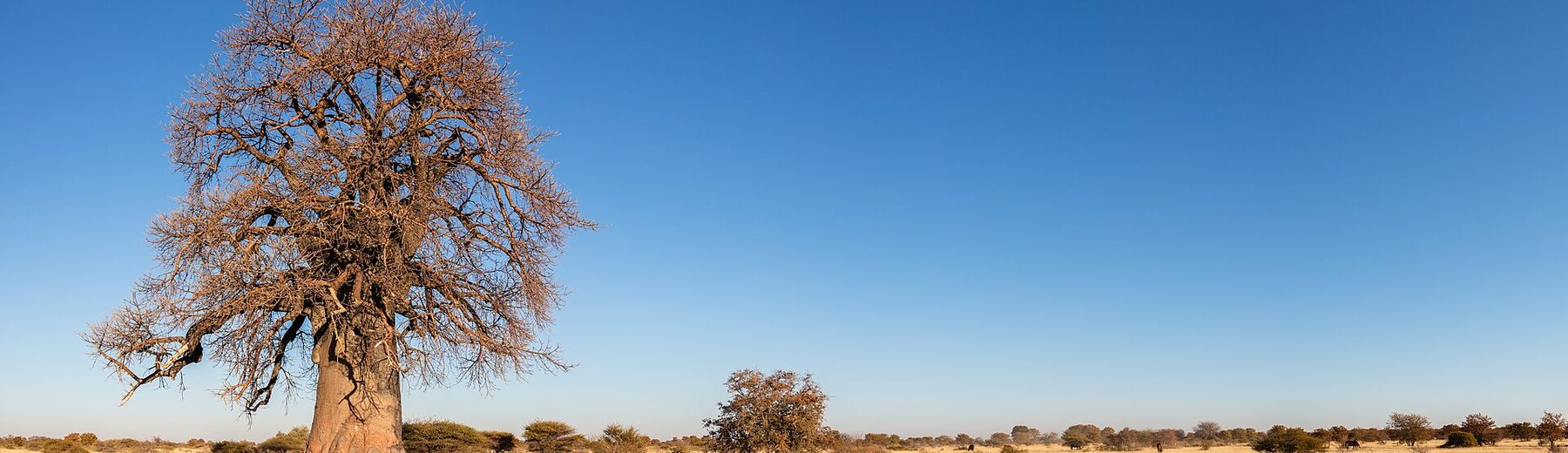
A country that chose scarcity
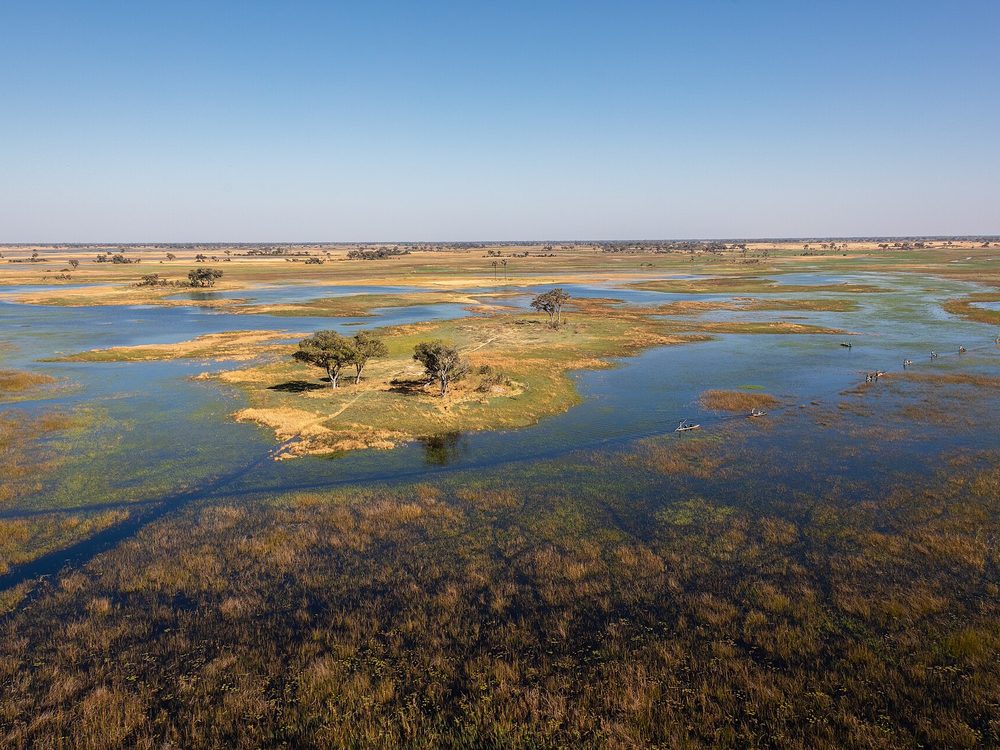
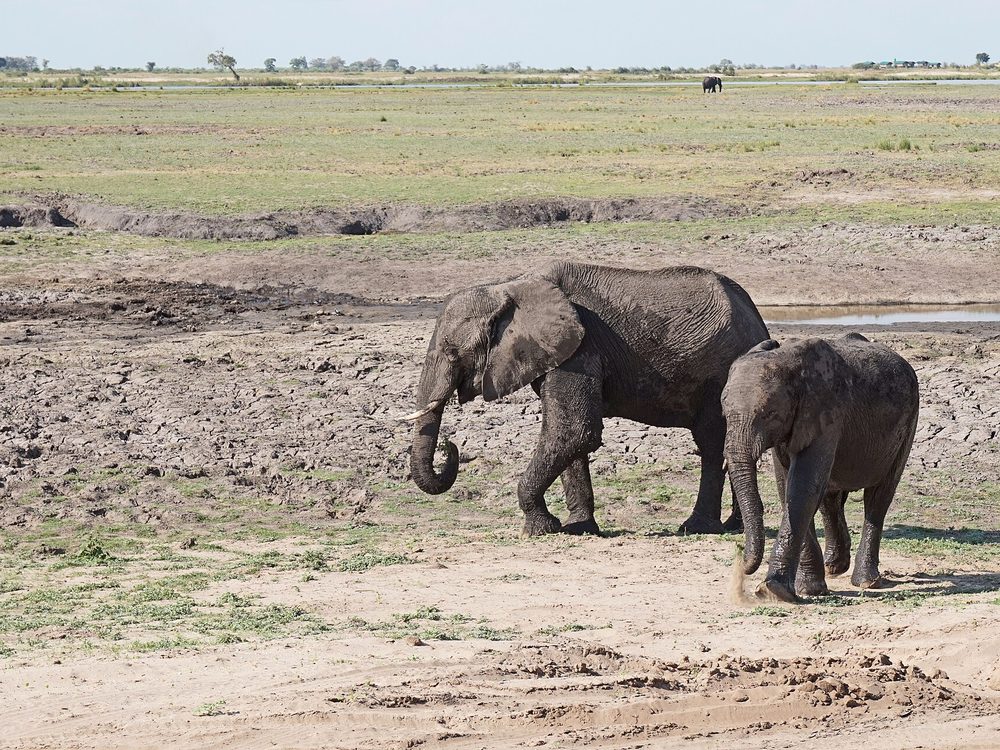
In the early 1990s Botswana chose high-value, low-impact tourism over volume, and wrote the choice into concession law. Only the concession holder may build camps or sell beds inside a concession, so vehicle numbers at a sighting stay low because the beds are capped. You are not choosing a hotel — you are choosing a piece of land and the single operator entitled to be on it.
Polish and all EU citizens travel visa-free for up to 90 days in a 12-month period; a USD 30 tourism development levy applies at entry. There is no direct service from Warsaw, but there is also no jet lag: Botswana keeps UTC+2, Warsaw's summer clock. The European winter falls in Botswana's green season — lower rates, dramatic skies, superb birding.
Through its Botswana programme and the Warsaw Royal Club network, DBF arranges concession selection, camp introductions, private aviation, and combined investment-and-travel missions for those examining the market and the country on the same trip.
An investment company and a fund
Direct investment into Botswana from Poland works badly, for four reasons at once: there is no tax treaty; the realistic ticket range is EUR 2–25 million, too large to concentrate in and too small to justify a bespoke structure; due diligence at 8,000 kilometres costs the same whether one invests EUR 2 million or EUR 50 million; and individual foreign investors do not get meetings with a Minister of Finance. Pooling answers all four.
Tier A — the investment company
A holding and co-investment vehicle for investors who want direct, identifiable exposure to named projects and are willing to be involved. Shareholders take equity in the company; the company takes equity in specific project SPVs — a solar plant, a housing-components factory, a logistics facility, a lodge. Higher engagement, higher potential return, higher single-asset risk.
Tier B — the fund
A regulated, professionally administered fund for investors who want diversified exposure and no operational involvement. Designed for registration in a European jurisdiction under CSSF- or FINMA-standard reporting, with independent audit and public annual reporting. Lower engagement, diversified risk, institutional-grade governance.
The two tiers are complementary rather than alternatives. An investor may hold both: fund units for diversified core exposure, and company shares for a specific project they understand.
The vehicle this connects to
DBF's Botswana programme operates alongside the Africa Investment and Development Fund (AIDF), a pan-African fund which the African Democratic Alliance for Freedom and Progress is helping to establish with the ADAFP Investment Company. Botswana and Morocco are its two anchor jurisdictions, chosen on the Fund's own governance-first criteria before any approach was made to either government. ADAFP holds two permanent governance seats — one on the Board, one on the Investment Committee — and takes no part in individual investment decisions, which rest with the Investment Committee.
The AIDF is not a donor programme, not a concessional facility and not a sovereign lending instrument. It does not lend to governments and adds nothing to public debt. It takes equity and equity-like positions in commercial projects, and bears the risk of those positions.
Three doors
For the investor
A confidential, non-binding conversation about ticket size, sector preference and horizon, followed by the structure memorandum and a pipeline summary. No commitment arises before definitive documentation and independent advice.
Start a confidential conversationFor the company or contractor
Construction, building materials, prefabrication, renewable energy, water treatment, cold chain, logistics, medical equipment and professional services map directly onto the BETP priorities, and in several cases onto the Strategic SEZ criteria. DBF arranges introductions to the Botswana Investment and Trade Centre and sector counterparties.
Ask about market entryFor the traveller
Okavango, Chobe, Linyanti, Makgadikgadi and Tsodilo — concession selection, camp introductions, private aviation, and itineraries that can be attached to an investor mission.
Plan a journeyThe September 2026 delegation
A delegation travelled to Gaborone during 7–11 September 2026 to discuss cooperation, investment and the Africa Investment and Development Fund, with approaches made to His Honour the Vice President and Minister of Finance, the Botswana Energy Regulatory Authority and the Minister of International Relations.
DBF proposes a Warsaw briefing followed by a Gaborone mission for a small group of interested parties, structured around meetings with the Botswana Investment and Trade Centre, sector counterparties and, by arrangement, relevant ministries. Participants who wish to extend into the Delta or Chobe can do so directly from the mission.
Sixty years of nothing going wrong
Botswana spent sixty years being the African country nobody wrote about, because nothing went wrong. That is precisely why it is worth a European investor's attention now, in the one period when something has. The diamonds are declining. The institutions that managed them are not.
This page is informational and a preliminary expression of interest. It is not an offer of securities, a prospectus, a solicitation or investment advice. The structure described is indicative and subject to legal structuring, regulatory authorisation and definitive documentation. Targets are objectives, not forecasts. Capital invested in emerging-market private equity can be lost in full. Tax rates are stated before treaty relief and were current at the date of the country profile; confirm with the Botswana Unified Revenue Service or Botswana counsel before modelling.
Photographs of Botswana by Diego Delso and Bernard Gagnon, used under CC BY-SA 4.0.